IEVC2026 | Program & Keynotes
Timetable
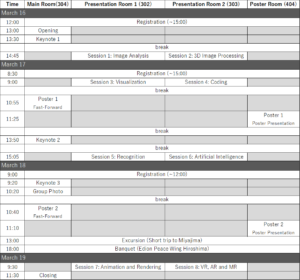
Final Program
Final Program (PDF) (Updated: March 11)
Keynotes
Keynote #1: Educational and Research Applications of Generative AI–Assisted Development of Various Computer Graphics Programs
Abstract: This study explores an educational and research framework that integrates generative AI into the development of a wide range of computer graphics (CG) programs. Recent advances in large language models have made it possible for learners and researchers to rapidly prototype CG algorithms, visualize geometric concepts, and iteratively refine implementations with AI-assisted guidance. In this work, students and researchers created multiple CG programs – including rendering techniques, geometric processing algorithms, and simulation prototypes – while interacting with generative AI to obtain code suggestions, debugging support, and conceptual explanations. The results demonstrate that generative AI not only accelerates the development process but also enhances conceptual understanding by enabling users to compare alternative implementations and explore edge cases more effectively. Furthermore, the study discusses pedagogical benefits, challenges, and best practices for incorporating generative AI into CG education and research environments. These findings suggest that AI-supported program creation can serve as a powerful tool for fostering creativity, deepening comprehension, and expanding the scope of CG-related learning and investigation.
Speaker: Prof. Tomoyuki Nishita
Professor Emeritus of the University of Tokyo and Hiroshima Shudo University
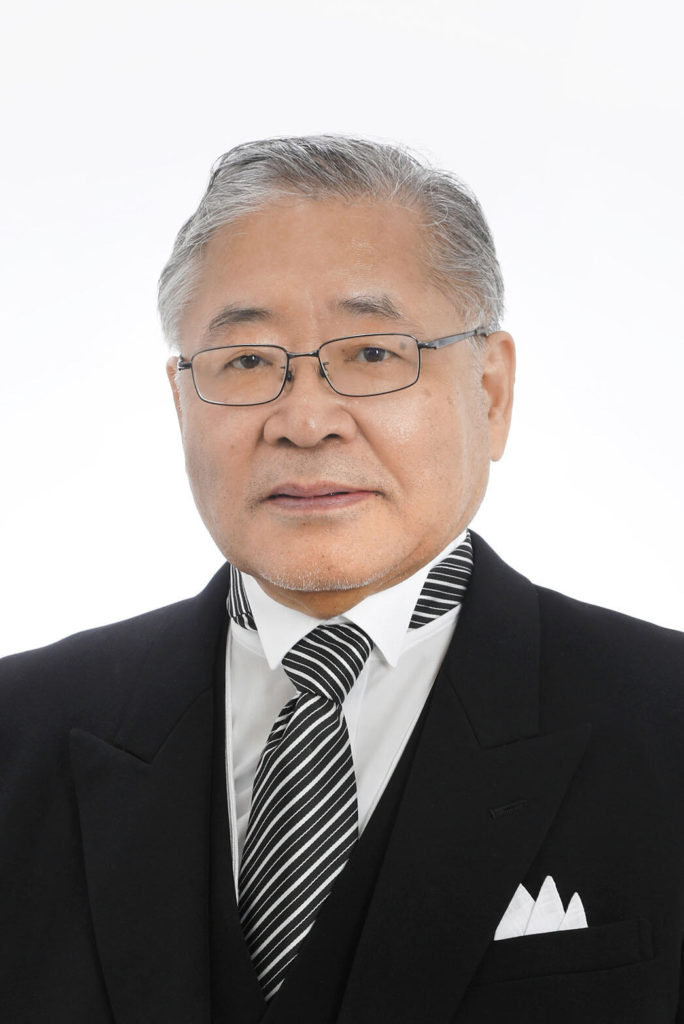
Tomoyuki Nishita is Professor Emeritus at the University of Tokyo and Hiroshima Shudo University, Japan, and has served as Director of Prometic CG Research (UEI Research) since 2013. He joined the Department of Economic Information at Hiroshima Shudo University, where he worked from 2013 to 2020, and served as a Professor in the Department of Complexity Science and Engineering (and previously in the Department of Information Science) at the University of Tokyo beginning in 1998. Prior to that, he taught at Fukuyama University (1979–1998 and 2025–2026) and at Digital Hollywood University (2021–present). He was also an associate researcher at the Engineering Computer Graphics Laboratory at Brigham Young University from 1988 to 1989. His research interests span a wide range of computer graphics fields, including lighting and shading models (radiosity), natural phenomena, real-time rendering, geometric modeling, and non-photorealistic rendering. Nishita received his BE, ME, and PhD in Engineering from Hiroshima University in 1971, 1973, and 1985, respectively. Dr. Nishita received the Research Award on Computer Graphics from the Information Processing Society of Japan in 1987, and the Steven A. Coons Award from ACM SIGGRAPH in 2005, and Lifetime Achievement Award from Asia Graphics in 2017. He was also awarded the Medal of Honor with Purple Ribbon (2017) and the Order of the Sacred Treasure, Gold Rays with Neck Ribbon (2024), honors conferred by the Japanese government. He has authored 23 SIGGRAPH papers and is recognized as one of the pioneers of the radiosity method. He served on the editorial board of IEEE Transactions on Visualization and Computer Graphics and was President of the Institute of Image Electronics Engineers of Japan in 2009.
Keynote #2: From Image Formation to Video Playback: Signal Processing for Color Electronic Paper
Abstract: Electronic paper (E-Paper) has been widely adopted in electronic readers and a broad range of consumer electronic devices. In recent years, continuous advances in next-generation materials, device architecture, and signal-processing chip technologies have significantly expanded its application scope, enabling integration into intelligent interactive systems and large-area advertising displays.
This talk reviews recent research progress in color E-Paper technologies. Owing to fundamentally different image formation mechanisms compared with conventional display technologies, color E-Paper introduces a range of new research challenges. The talk will further highlight potential future research directions and development opportunities, including the integration of artificial intelligence into color E-Paper systems, with particular emphasis on image quality optimization, video display, and intelligent interactive applications.
Speaker: Prof. Wen-Chung Kao
Research Chair Professor and Dean with the Department of Electrical Engineering, National Taiwan Normal University

Prof. Wen-Chung Kao received the M.S. and Ph.D. degrees in Electrical Engineering from National Taiwan University, Taiwan, in 1992 and 1996, respectively. From 1996 to 2000, he served as a Department Manager at the SoC Technology Center, Industrial Technology Research Institute (ITRI), Taiwan. From 2000 to 2004, he was Assistant Vice President at Foxlink Group. During 2001–2002, he participated in the establishment of SiPix Technology Inc., the first electronic paper startup company in Taiwan. Since 2004, he has been with National Taiwan Normal University (NTNU), Taipei, Taiwan, where he currently serves as a Chair Professor in the Department of Electrical Engineering.
His research interests include system-on-a-chip (SoC) and embedded systems, color electronic paper technologies, digital camera systems, machine vision, and color imaging science. Prof. Kao has chaired eight IEEE conferences and has served as a Senior Editor of IEEE Transactions on Consumer Electronics as well as an Associate Editor of IEEE Consumer Electronics Magazine. From 2023 to 2024, he served as President of the IEEE Consumer Technology Society.
He is currently the Founding Dean of the College of Interdisciplinary Industry–Academia Innovation at National Taiwan Normal University. A Fellow of the IEEE, he also serves as Chair of the Fellow Evaluating Committee for the IEEE Consumer Technology Society.
Keynote #3: Recent Advances in HDR Image Reconstruction
Abstract: High Dynamic Range (HDR) content creation has become an important topic for modern media and entertainment sectors, as well as gaming and Augmented/Virtual Reality industries. Many methods have been proposed to reconstruct the HDR counterpart of Low Dynamic Range (LDR) image/video when given as input a single exposure or multi-exposure LDR content. In this talk, recent advances in HDR image reconstruction based on a single LDR image are presented. The first two approaches (ArtHRD and HISTOHDR) are based on the generation of two additional “helper” modalities, which contain additional information derived from the input LDR image. The third approach takes into account the interaction between lighting/shadow and different material/surface properties. While promising results are obtained, existing LDR-HDR datasets lack diversity in scene conditions (e.g., lighting, weather, locations) and image features (e.g., color, contrast, saturation) for model training purposes. Therefore, GTA-HDR, a synthetic dataset based on the recording of the gameplay of a video game, Grand Theft Auto V (GTA-V), is curated to supplement diversity of scenes and variety in images.
Speaker: Prof. KokSheik Wong
Professor in the School of Information Technology at Monash University Malaysia
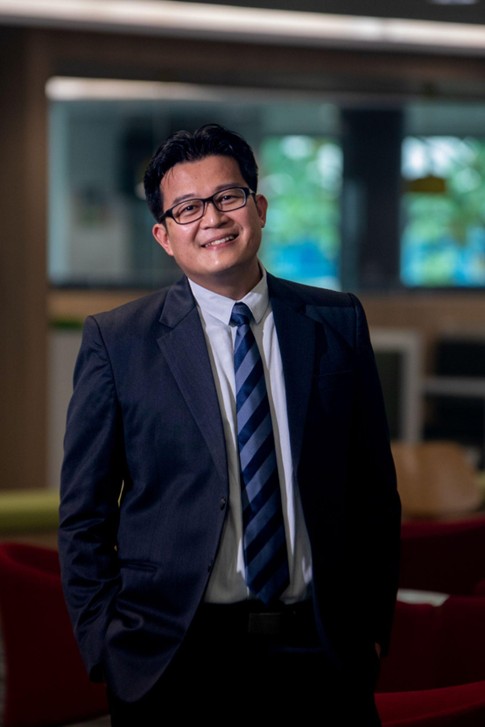
KokSheik is a Professor in the School of Information Technology at Monash University Malaysia. In 2009, he received the Doctor of Engineering degree from Shinshu University, Japan, under the Monbukagakusho scholarship. KokSheik’s research interests include multimedia signal processing and cybersecurity. He is a member of the Information Forensics and Security (IFS) technical committee of IEEE Signal Processing Society, and he actively contributes to the research community in various capacities, including associate editor and conference organizer. In addition, he is a member of the Board of Governors: Members-at-large in the Asia Pacific Signal and Information Processing Association (APSIPA). He has been part of IIEEJ IEVC since its inaugural event at Cairn, Australia in 2007, and continued to contribute to the organization of a few IEVC events, including IEVC 2024 in Taiwan.
Excursion & Banquet
The conference excursion will be a short trip to Miyajima, one of Japan’s most iconic scenic destinations.
The conference banquet will be held in the lounge of Edion Peace Wing Hiroshima, a soccer stadium that opened in 2024 and has quickly become one of Hiroshima’s newest landmarks.
About Us
